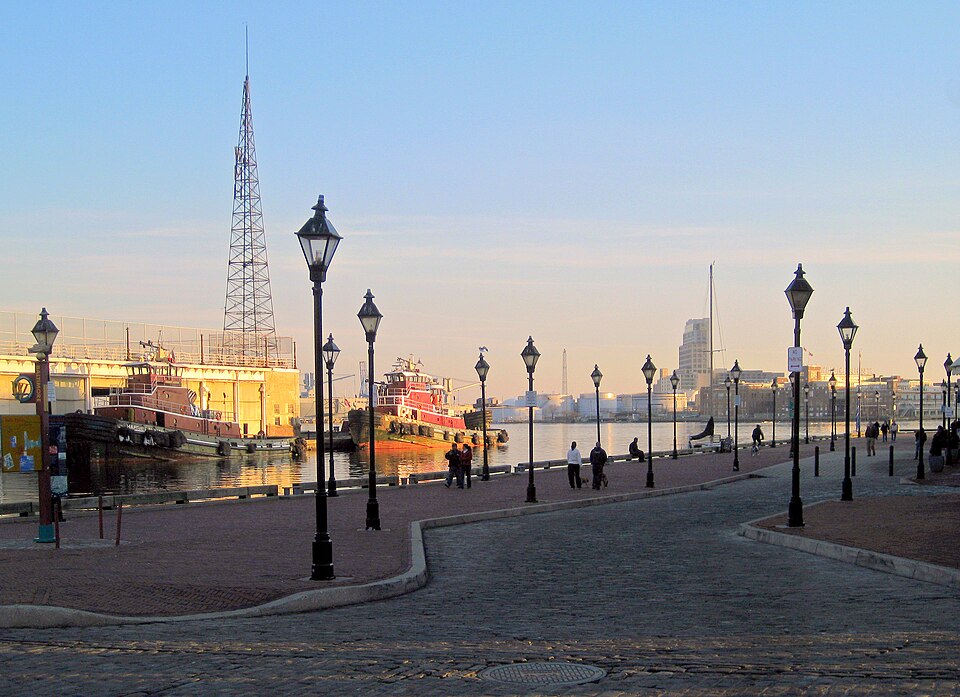
The Wire ran for five seasons between 2002 and 2008. It was set in Baltimore, filmed in Baltimore and — this is the thing that distinguishes it from almost every other prestige drama — used the actual city as an argument. Baltimore was not the backdrop. Baltimore was the point. The show made the case that the city's institutions, from the police department to the school system to the docks to the press, were systematically failing the people who lived within them. It made this case so thoroughly that universities began teaching the show alongside sociology and urban policy courses.
What this means for the visitor is that The Wire's Baltimore is not the heavily produced, simplified version of a city that most television creates. It is Baltimore. The streets, the corners, the row houses, the harbour, the schools — they look on screen exactly as they look in person because they are the same places. Walking through the neighbourhoods where the show was filmed is not like visiting a set. It is like visiting the subject matter.
This requires a certain readiness. Parts of West and East Baltimore where the show filmed are genuinely deprived neighbourhoods. This was the show's entire point. A car is essential. Walking tours of these areas are not advisable. The Faidley's crab cakes, however, are mandatory.
First Things First: Faidley's Seafood
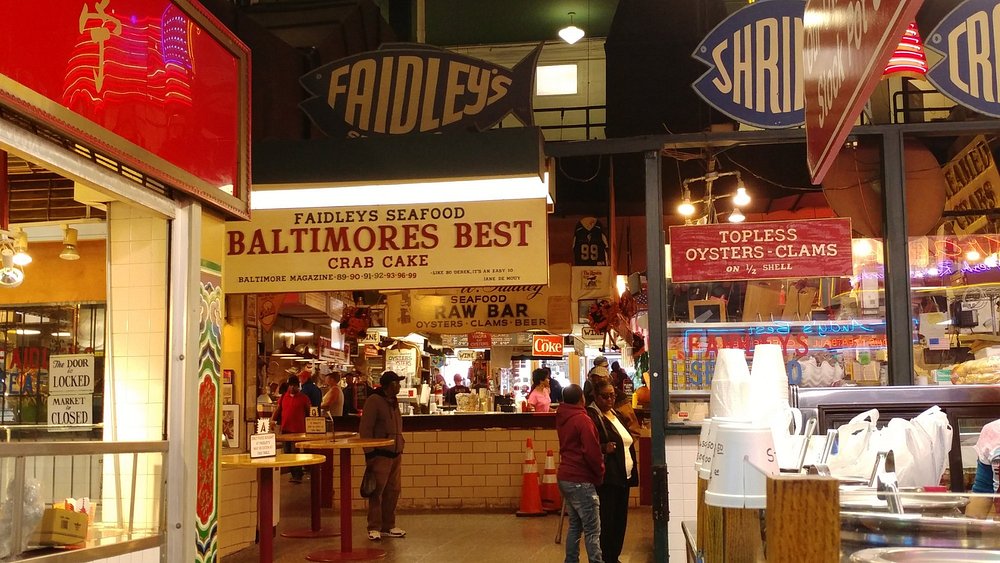
Before anything else, before The Pit and before Cutty's gym and before McNulty's favourite bar, you go to Faidley's Seafood in Lexington Market at 203 North Paca Street. Faidley's has been making crab cakes since 1886. McNulty brings them for fellow detectives on a stakeout in the show, and his colleagues respond — "Faidley's? You all right, McNulty" — with the particular warmth that people reserve for someone who has demonstrated real taste.
Every food publication that has ever assessed Baltimore's crab cake options has placed Faidley's at or near the top. The lump crab cakes run to around $18 each and are worth every cent. Faidley's is open Monday to Saturday and closes at 5pm. Plan your day around this. It is the most important stop on the itinerary.
The Pit — McCulloh Homes, West Baltimore
The drug corners of The Wire's first season centred on "the Pit" — the courtyard of a low-rise housing project in West Baltimore where D'Angelo Barksdale managed his crew of young dealers including Bodie, Poot and Wallace. The real location is McCulloh Homes on the western edge of downtown Baltimore. The orange couch that became one of the show's most recognisable images was in the southernmost group of buildings.
The housing project still stands. The area looks broadly as it did during filming. Drive through rather than walk. The show was right about this neighbourhood in ways that have not been resolved by the years since it aired, and visiting with that understanding rather than simply hunting for a television backdrop makes the experience considerably more meaningful.
Cutty's Gym
Dennis "Cutty" Wise's community boxing gym — one of the show's most hopeful recurring elements, a man trying to offer young people an alternative to the corners — was filmed in an East Baltimore warehouse space that has since been redeveloped. The Baltimore Food Hub now occupies the general area. The decorations from Cutty's gym were still visible in the abandoned building as recently as 2014. Today the specific space is gone, though the neighbourhood context around it remains.
Cutty's gym matters as a character location rather than as a physical destination. What it represents — the limits of individual good will against structural failure — is the argument that runs through all five seasons. Walking the streets around its former location with that in mind gives you something more than a photo opportunity.
On safety: East and West Baltimore, where most of The Wire's locations are concentrated, are real neighbourhoods with real challenges. The show did not invent or exaggerate them. Drive rather than walk, stay aware of your surroundings, and approach the visit with the same respect you would want applied to any community that has been turned, without entirely choosing it, into a television subject.
The Kavanaugh's Bar Area — Downtown Baltimore
The cop bar Kavanaugh's, where the detectives of the Baltimore homicide unit drank, argued and occasionally achieved something resembling human connection, was based on a real Kavanaugh's that closed in the late 1990s. For the show, the Sidebar Tavern at the corner of Lexington Street and Guilford Avenue was converted into the set. The Sidebar has since changed but the downtown Baltimore bar scene that informed Kavanaugh's is alive and well. The Brewer's Art on North Charles Street, which appeared in the show, is still open and still serves exceptional beer.
The Docks — Baltimore Inner Harbour
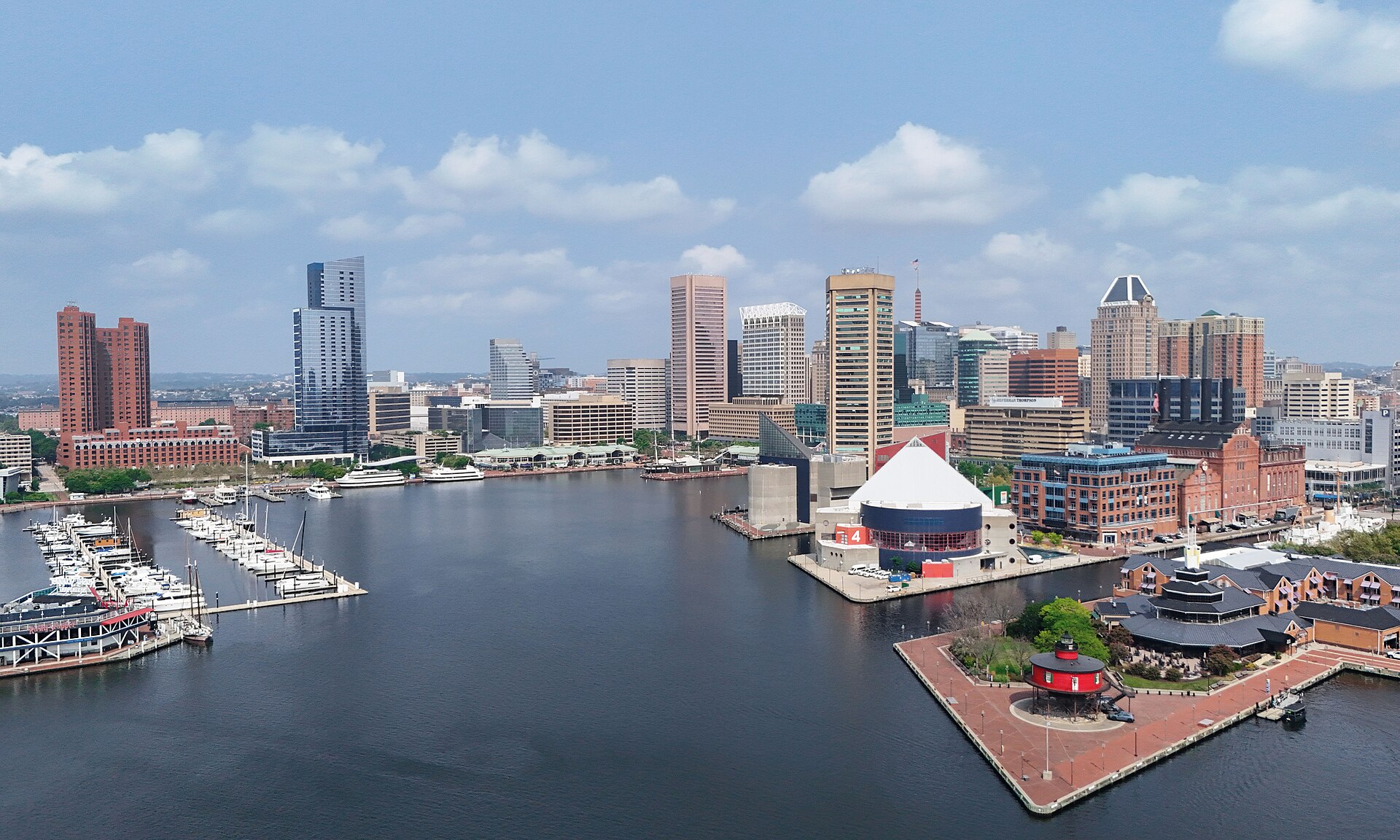
Season two of The Wire turned its attention to the stevedores of the Baltimore docks and the slow death of American port labour in the face of containerisation. The Inner Harbour and Locust Point areas provided the locations, and the physical infrastructure of Baltimore's working port is still present and navigable. The contrast between the tourist-facing Inner Harbour — the USS Constellation, the National Aquarium, the restaurant rows — and the working port infrastructure that season two examined is itself a kind of argument the show would have appreciated.
Pennsylvania Station
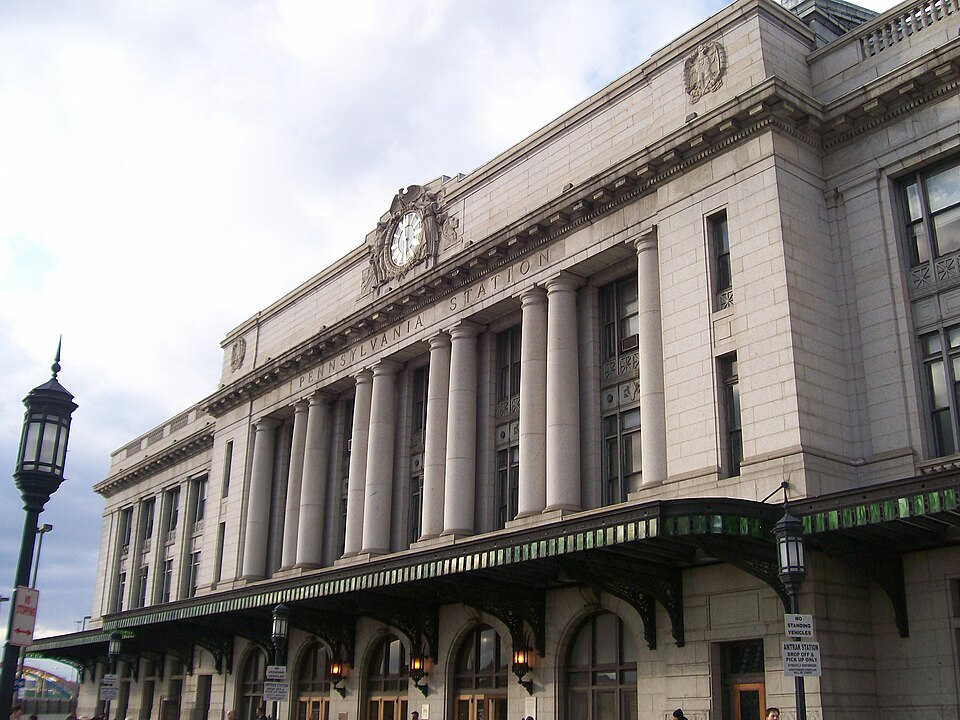
Baltimore's Pennsylvania Station, a 1911 Beaux-Arts building on North Charles Street, appeared in several Wire scenes and is worth visiting in its own right. It is one of the more beautiful train stations on the American east coast, regularly overlooked in favour of Washington's Union Station to the south. It is also, practically speaking, where you arrive if you take the Amtrak from New York or Washington, which is by far the most sensible way to get to Baltimore.
The Wire Baltimore Itinerary
- Arrive by Amtrak at Pennsylvania Station — appeared in the show, beautiful building, practical entry point.
- Faidley's Seafood at Lexington Market — 203 North Paca Street. Open Mon–Sat until 5pm. Non-negotiable.
- McCulloh Homes (The Pit) — West Baltimore. Drive through, understand the context.
- Baltimore Food Hub area — East Baltimore, former location of Cutty's gym filming site.
- The Brewer's Art — 1106 North Charles Street. Still open. Appeared in the show. Excellent beer.
- Inner Harbour — The tourist-facing city centre, useful contrast with the show's Baltimore.
- The full driving tour — 54 locations, 54 miles, available as a guide via Wikivoyage's Wire Tour. Allow a full day.
Getting There and Staying
Baltimore-Washington International Airport (BWI) is the closest airport, about 10 miles south of the city centre. Amtrak from New York Penn Station takes approximately two and a half hours. From Washington DC the train is 40 minutes.
The Inner Harbour area has the densest concentration of hotels and is the most practical base. It puts you within reasonable driving distance of all the Wire locations and also gives you access to the city's restaurant scene, which is excellent and heavily focused on the Chesapeake Bay seafood that McNulty demonstrates taste in at Faidley's.
Baltimore is worth more than a Wire pilgrimage. The city has one of the best art museums in America (the Baltimore Museum of Art, free admission), Fort McHenry where the Star-Spangled Banner was written, and a food culture that gets less attention than it deserves. The Wire showed you one Baltimore. The city has several more.
✈️ Getting there & staying